
Understanding ERC-721 NFT Standard: The Blueprint for Digital Ownership
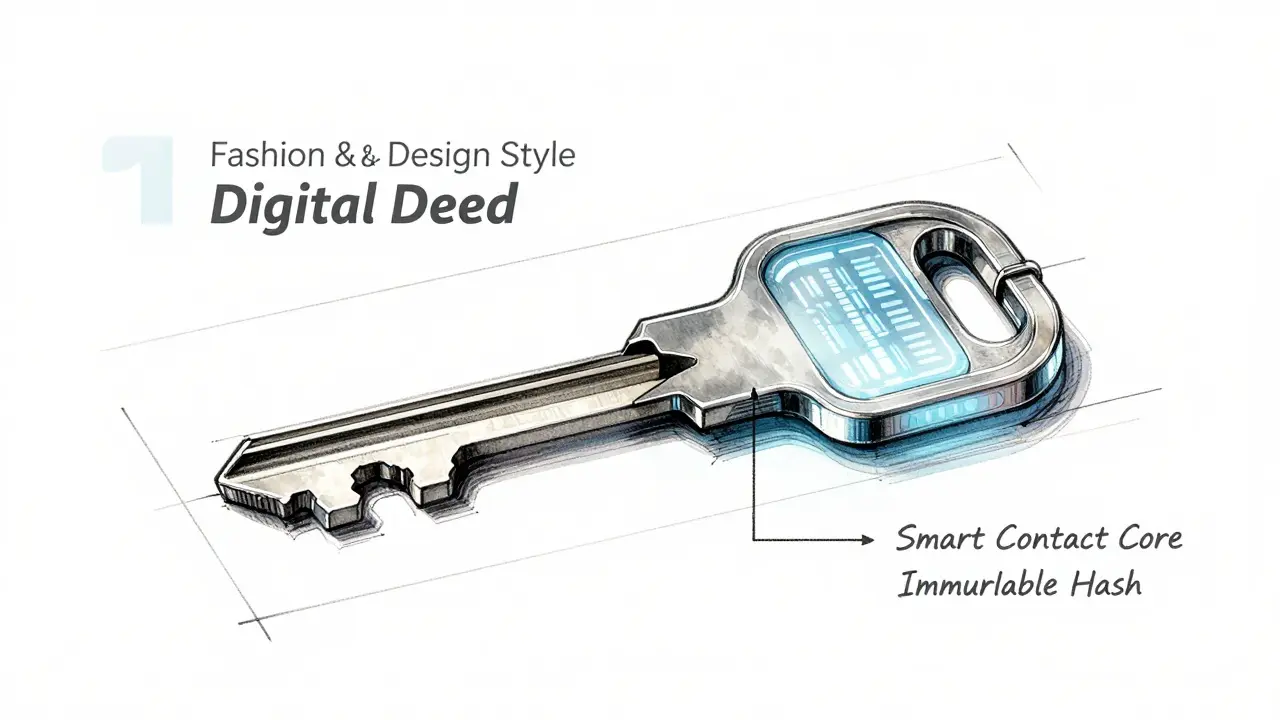
Imagine buying a house. You get the keys, but you also get a deed-a legal document that proves you own that specific plot of land, not just any house in the neighborhood. Now, imagine trying to buy a digital image. Without a system like ERC-721, which is the technical standard that defines how non-fungible tokens (NFTs) are created and managed on the Ethereum blockchain, that image is just a copyable file. Anyone can right-click and save it. But with ERC-721, you own a unique token linked to that image, verified by code.
This isn't just about expensive JPEGs of monkeys. It’s about how we prove ownership in the digital age. Whether it’s a rare skin in a video game, a ticket to a concert, or a deed to a virtual piece of real estate, ERC-721 provides the rulebook. If you’ve ever wondered why some crypto assets are interchangeable (like Bitcoin) and others are unique (like a one-of-a-kind artwork), this is the difference. Let’s break down how this standard works, why it matters, and what pitfalls you need to avoid.
The Core Concept: Fungible vs. Non-Fungible
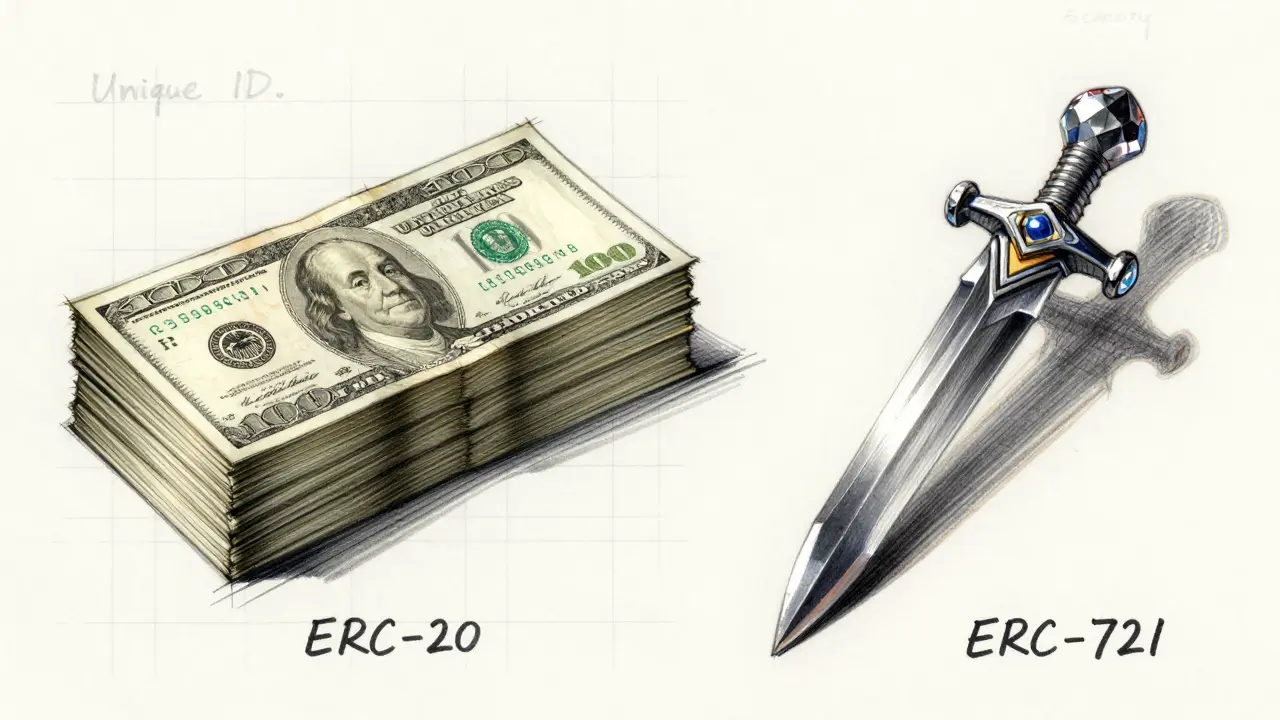
To understand ERC-721, you first have to understand what it isn’t. Most cryptocurrencies follow the ERC-20 standard, which handles fungible tokens that are identical and interchangeable, like dollars or euros. If I give you a $20 bill and you give me a different $20 bill, nothing changes. They have the same value and function.
ERC-721 flips this script. Each token has a unique ID number-think of it like a serial number on a painting. Token #1 might be a blue sword, while Token #2 is a red shield. You can’t swap them directly because they aren’t equal. This uniqueness allows for verifiable scarcity. According to data from Chainalysis, over 95% of all NFTs on Ethereum use this standard. It became the foundation because it solved a massive problem: how do you make something digital feel exclusive?
- Fungible (ERC-20): Interchangeable units. Good for currency, voting rights, or loyalty points.
- Non-Fungible (ERC-721): Unique units. Good for art, collectibles, domain names, and property deeds.
How the Code Actually Works
You don’t need to be a coder to use an NFT, but knowing the basics helps you spot scams or understand why transactions fail. The ERC-721 standard requires smart contracts to implement nine mandatory methods. These are functions that tell the blockchain what the token can do.
Here are the most critical ones:
- balanceOf: Checks how many NFTs a wallet holds. Unlike ERC-20, where you check balance by token type, here you check by address.
- ownerOf: Returns the owner of a specific token ID. This is the ultimate proof of ownership.
- transferFrom / safeTransferFrom: Moves the token from one wallet to another. The "safe" version checks if the receiver can actually accept NFTs, preventing accidental losses.
- approve / setApprovalForAll: Lets you authorize a third party (like a marketplace) to sell your NFT on your behalf without giving them full control of your wallet.
When these actions happen, the contract emits events. For example, a Transfer event fires when ownership changes. Marketplaces like OpenSea listen for these events to update their databases in real-time. If you see an NFT listed for sale, it’s because the owner approved the marketplace to handle the transfer via these standardized commands.
The Metadata Problem: Where Does the Art Live?
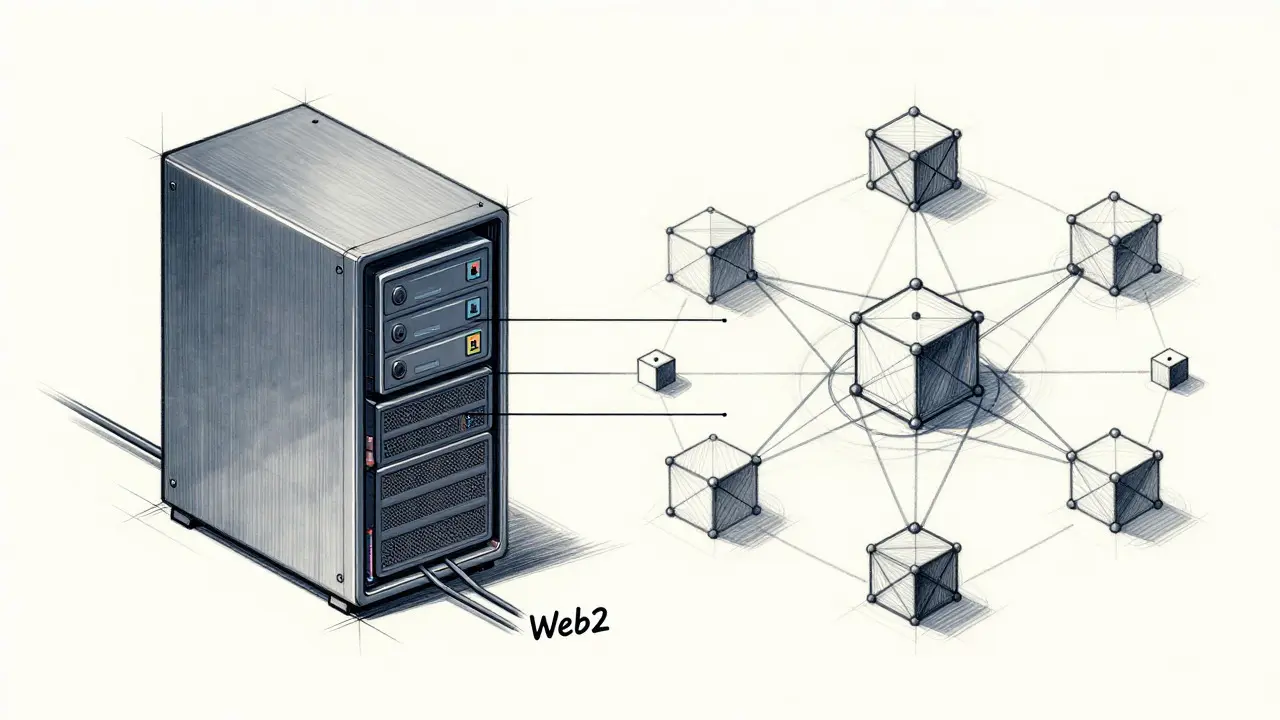
This is where things get tricky. The ERC-721 token itself doesn’t store the image, the name, or the description. It stores a pointer-a URL-that leads to a JSON file containing that info. This JSON file usually lives on decentralized storage systems like IPFS (InterPlanetary File System).
Why does this matter? Because if that link breaks, your NFT becomes a blank box. We’ve seen this happen. In 2023, several high-profile projects lost their images because they hosted files on central servers instead of IPFS. When those servers went offline, the tokens remained, but the art vanished.
Always check the metadata. A robust ERC-721 implementation uses a tokenURI function that points to a permanent, decentralized location. If a project hosts its assets on a standard HTTP website, consider that a red flag. As Dr. Gavin Wood noted, relying on traditional links creates centralization risks in an otherwise decentralized system.
| Feature | ERC-721 | ERC-20 | ERC-721A (Optimized) |
|---|---|---|---|
| Uniqueness | Yes (Unique IDs) | No (Identical Units) | Yes (Unique IDs) |
| Gas Cost (Minting 10 Tokens) | High (~1.2M gas) | N/A | Lower (~750k gas) |
| Best Use Case | Single rare items, art | Currency, governance | Large collections, gaming items |
| Market Share | Dominant (68%) | Dominant (Crypto) | Growing (Art Blocks) |
Gas Costs and Scaling Issues
Ethereum is secure, but it’s not cheap. Deploying an ERC-721 contract costs around 1.2 million gas, and transferring a single token can cost between 45,000 and 65,000 gas depending on network congestion. For a single artist selling one piece, this is manageable. For a game developer minting 10,000 swords, it’s a nightmare.
This inefficiency led to the creation of extensions like ERC-721A, which is an optimized version of the standard that reduces gas costs by up to 50% for batch minting. Developed by Art Blocks, it allows creators to mint large collections in one transaction rather than thousands of individual ones. If you’re building a project with mass appeal, sticking to pure ERC-721 might burn through your budget before you even launch.
However, Ethereum’s upcoming upgrades, like Dencun, promise to reduce these costs by 10-15% through proto-danksharding. While helpful, it doesn’t solve the root issue for high-volume applications. Many developers are now looking at Layer 2 solutions (like Polygon or Arbitrum) where ERC-721 transactions are nearly free, though they still rely on Ethereum for final settlement.
Security Risks You Can’t Ignore
Just because the standard is well-known doesn’t mean it’s immune to bugs. In fact, ERC-721 contracts are frequent targets for hackers. Here are the top threats:
- Reentrancy Attacks: Occur when a malicious contract calls back into your token contract before the first transaction finishes. This can drain funds or steal tokens. Always use checks-effects-interactions patterns in your code.
- Metadata Manipulation: Hackers sometimes exploit weak permissions to change the image or name associated with a token ID. This happened in several major incidents in 2023, accounting for 37% of reported NFT security issues.
- Approval Scams: Users often approve marketplaces indefinitely. If that marketplace gets hacked, your NFTs are vulnerable. Revoke approvals regularly using tools like Revoke.cash.
Auditing is non-negotiable. Companies like OpenZeppelin provide battle-tested libraries that cut development time by 40% and significantly reduce bug risk. Never write core ERC-721 logic from scratch unless you have a team of senior Solidity experts.
The Future: Beyond Static Images
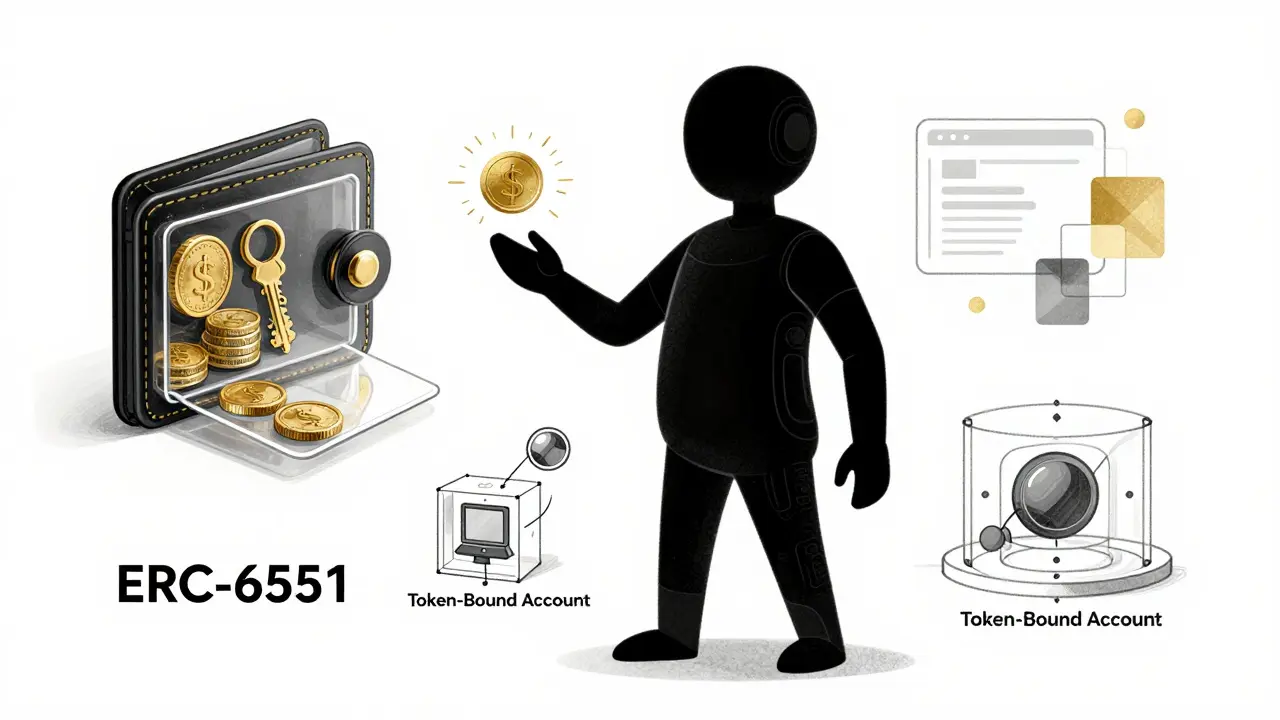
ERC-721 is evolving. The latest big innovation is ERC-6551, which enables NFTs to act as smart wallets, allowing them to hold other tokens, sign messages, and interact with dApps independently. Imagine owning an NFT character that also owns gold coins, weapons, and land. That character can go to a marketplace, buy items, and sell them-all autonomously.
This turns NFTs from static collectibles into active agents in the Web3 economy. By late 2023, over 12,000 active token-bound accounts were already in use. This technology could revolutionize gaming, where characters truly own their inventory, or finance, where collateralized loans are tied directly to asset performance.
Regulatory clarity is still pending. The SEC’s 2024 guidance suggests some NFTs might be classified as securities, which could impact how projects are structured. However, the underlying technology remains robust. As long as people want to prove digital ownership, ERC-721-and its derivatives-will remain the backbone of the industry.
Is ERC-721 only for Ethereum?
While ERC-721 was designed for Ethereum, the concept has been adapted for other blockchains. For example, Polygon and Binance Smart Chain have compatible implementations. However, Solana uses a different standard called SPL Token for its NFTs. If you’re cross-chain, you’ll need bridges to move ERC-721 tokens between networks.
Can I create my own ERC-721 token?
Yes, but it requires knowledge of Solidity programming. Most developers use frameworks like Hardhat or Foundry and libraries from OpenZeppelin to deploy contracts safely. You’ll also need ETH to pay for gas fees during deployment and minting.
What happens if the website hosting my NFT goes down?
If the NFT’s metadata is stored on a centralized server (HTTP), the image may disappear from your wallet view, though the token itself remains on the blockchain. If it’s stored on IPFS (decentralized), it should remain accessible. Always verify where the metadata is pinned before buying.
Why are ERC-721 transfers so expensive?
Ethereum’s mainnet charges gas fees based on computational complexity. ERC-721 transfers involve updating ownership records and emitting events, which consumes more resources than simple currency transfers. Using Layer 2 networks or optimized standards like ERC-721A can significantly lower these costs.
How do I know if an NFT is authentic?
Check the contract address on Etherscan. Verify that it matches the official project website. Look for verification badges on marketplaces like OpenSea. Additionally, inspect the token URI to ensure the metadata points to a legitimate source. Beware of copycat contracts with similar names but different addresses.
Kumaran sowkarpet
June 11, 2026 AT 13:48hey frnds, this is really good info about erc-721. i was confused about why some nfts cost so much gas and now i get it. the part about metadata on ipfs is super important too. dont let your art disappear like that :(
Mauricio Contreras Loredo
June 11, 2026 AT 23:43Oh look, another article explaining how to buy digital rocks at a premium. Sure, because what the world needed was more ways for tech bros to feel special while burning electricity. But hey, if you enjoy paying $50 in gas fees to move a jpeg from one wallet to another, by all means, keep playing.
Kenneth Riley
June 13, 2026 AT 22:00the problem with these standards is they are built on sand. ethereum is slow and expensive and everyone knows it but they keep pretending its secure. reentrancy attacks happen because devs are lazy and copy paste code without understanding it. stop buying trash.
sreeja boora
June 15, 2026 AT 14:04The technical explanation provided is adequate, though it lacks depth regarding the regulatory implications for international users. The distinction between fungible and non-fungible tokens is correctly identified, yet the article fails to address the broader economic impact of such speculative assets on traditional markets. One must consider the stability of the underlying infrastructure before engaging with these protocols.
Grace Newman
June 17, 2026 AT 08:24I find it deeply unsettling that we are entrusting our sense of ownership to a decentralized ledger that is ultimately controlled by a small group of miners and validators who can censor transactions at will. The notion that IPFS provides true decentralization is a fallacy; nodes can go offline, and gateways can be blocked. We are building a house of cards on top of a crumbling foundation, and when the music stops, those 'unique' tokens will be worthless lines of code.
Annemarie Fitzgerald
June 18, 2026 AT 14:57so basically ur just buying a receipt for a picture u cant even touch. its like owning a shadow. why do ppl think this is valuable? its all fake value created by hype. i bet half these projects are scams anyway. the whole thing is a bit sus to me tbh.
Abby Sivertsen
June 19, 2026 AT 19:37i mean, if you like it, cool. but personally i just stick to regular art. less stress.
Benjamin Eisen
June 20, 2026 AT 15:40Great breakdown! I think a lot of people miss the point about safeTransferFrom. It's not just a nice-to-have, it's crucial for preventing loss. I've seen friends lose tokens because they sent them to a contract that didn't accept ERC-721s. Always check if the recipient supports the standard. Also, the gas costs on L2s are definitely the way to go for gaming items.
ravi mahla
June 22, 2026 AT 02:46lol yeah right click save bro. still doesnt change the fact that u own the token. smart guys make money here while u complain. maybe try learning instead of hating?
Mark Brunschwiler
June 23, 2026 AT 18:38it feels empty. i have these tokens but they don't love me back. i just want connection. why is everything so cold and digital? i miss the days when we could just talk face to face without checking blockchain explorers. it makes me sad inside.
Sonya O'Brien
June 24, 2026 AT 08:56While the technical details are certainly interesting, I believe we need to look at the bigger picture of how these technologies integrate into our daily lives, considering that the environmental impact of proof-of-work systems has been a major concern for many communities, and although Ethereum has moved to proof-of-stake, the energy consumption of other chains remains an issue that we cannot ignore if we truly want sustainable digital ownership solutions that benefit everyone involved in this evolving ecosystem.
Filbert Reeves
June 25, 2026 AT 17:06they tell us its secure but its not. the big banks are watching every transaction. your data is not private. they use the blockchain to track you better than ever before. dont trust the tech giants. they want to control your identity through these tokens. wake up sheeple.
Nick Rice
June 27, 2026 AT 03:50You're all missing the potential here. This is the future of property rights. Whether you like it or not, digital scarcity is real. If you can't adapt, you'll be left behind. Stop complaining and start learning how to use these tools effectively. The market doesn't care about your feelings.
Amit Thakur
June 27, 2026 AT 12:31As a developer, I can confirm that implementing ERC-721A for batch minting is a game changer. The gas savings are significant. However, ensure you audit your contracts thoroughly. Reentrancy vulnerabilities are still prevalent in poorly written code. Use OpenZeppelin libraries to mitigate risks. Do not underestimate the complexity of state changes in Solidity.
Eric Scheinberg
June 28, 2026 AT 05:11The elucidation of the ERC-721 standard is precise. It is imperative to note that the separation of metadata storage from the token itself introduces a layer of dependency that compromises the absolute integrity of the asset. Users must exercise due diligence in verifying the persistence of the URI targets.
pankaj chawla
June 28, 2026 AT 15:47Good post. I agree with the points on security. Always revoke approvals after trading. Many people forget this step and leave their wallets vulnerable. It is a simple habit that can save you a lot of trouble later.
Jessica Lane
June 29, 2026 AT 07:12This is a very comprehensive overview. I appreciate the clear distinction between ERC-20 and ERC-721. The section on metadata risks is particularly insightful. It highlights the importance of decentralized storage solutions like IPFS. I wonder how long it will take for the average user to understand these nuances.
Charles Pawlikowski
June 30, 2026 AT 00:52america needs to regulate this stuff hard. its a mess over there. too many scammers taking advantage of naive people. we need strict laws to protect our citizens from these crypto frauds. its only a matter of time before the government steps in and cleans up the web3 space :)