Web3 vs Web2: Key Differences, Benefits, and Real-World Examples
Imagine owning your digital life completely. No more platforms deciding who sees your posts, no more companies selling your data behind the scenes, and no more fear of a server crash wiping out your virtual assets. This is the promise of Web3, the next generation of the internet built on blockchain technology that gives users control over their data and digital assets. But how does it actually compare to the internet you use every day? That’s where Web2, the current read-write web dominated by centralized platforms like Facebook, YouTube, and Google comes in.
If you’ve ever wondered why people are making such a big deal about decentralization, or if you’re a developer trying to figure out which stack to learn, this guide breaks it down without the jargon. We’ll look at the real differences in speed, cost, and ownership, using concrete examples from gaming, finance, and social media. By the end, you’ll know exactly where each model shines and where it falls short.
The Core Difference: Who Owns Your Data?
The fundamental shift between these two eras isn’t just technical; it’s philosophical. In Web2, you rent space on someone else’s platform. When you post a photo on Instagram, technically, Meta owns the rights to display, analyze, and monetize that image according to their terms of service. You have access, but not true ownership. If they change the algorithm, your reach drops. If they ban you, your audience vanishes.
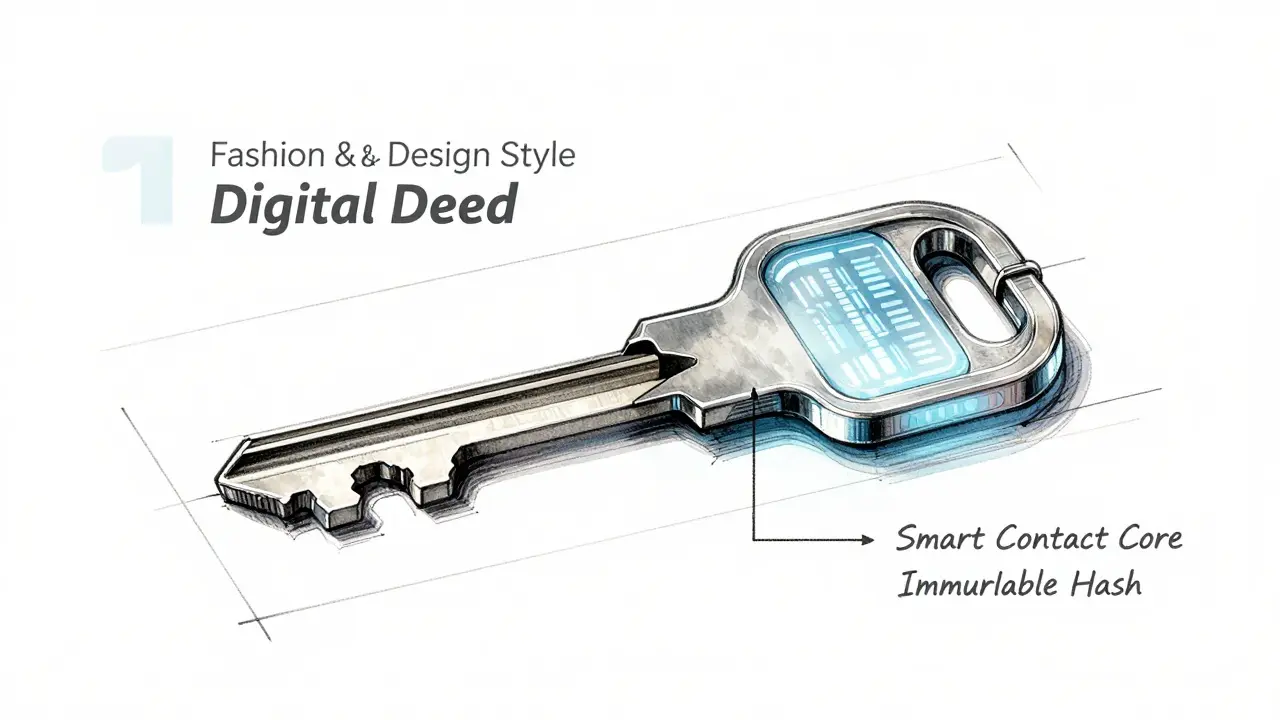
In contrast, Web3 operates on a “read-write-own” model. Here, your identity and assets are tied to cryptographic keys held in a digital wallet. These wallets act as your passport across different applications. If you create an artwork as an NFT on one platform, you can move it to another marketplace without losing its history or value. This portability is the core value proposition: you own what you make, and no single corporation can revoke that right unilaterally.
How They Work Under the Hood
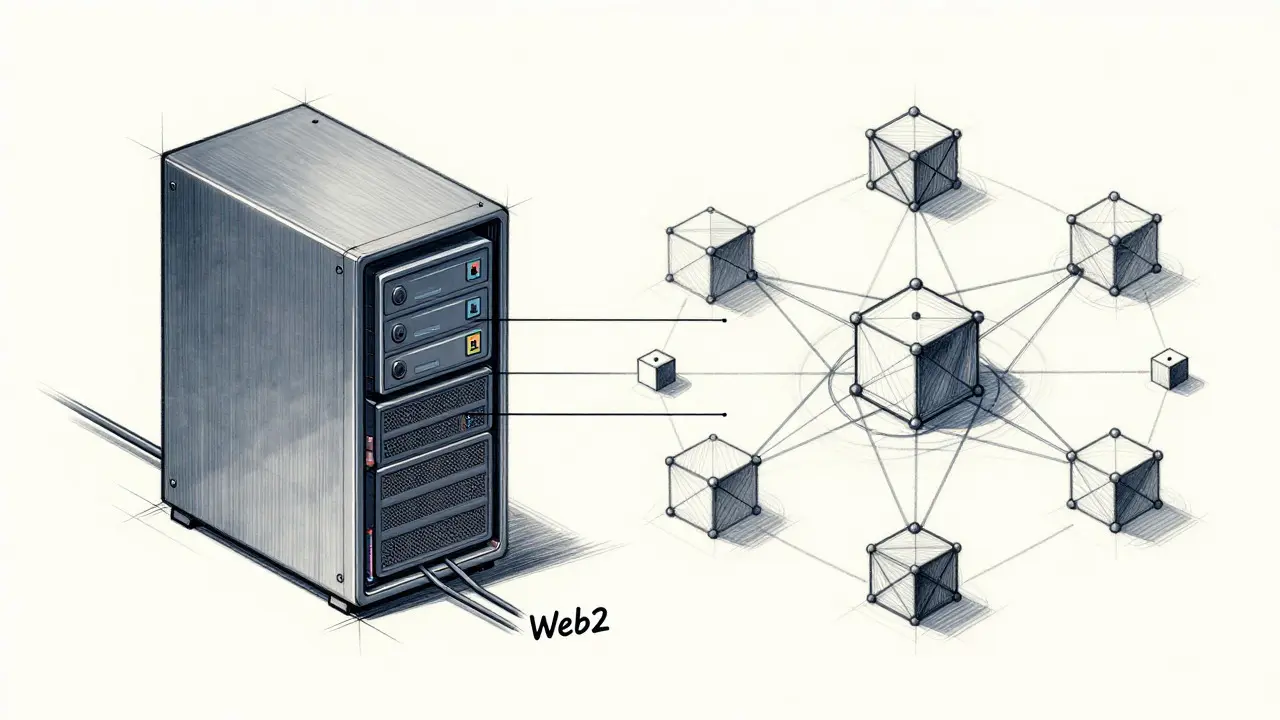
To understand the trade-offs, you need to peek under the hood. Web2 relies on a client-server architecture. When you click a link, your browser sends a request to a specific central server (like Amazon’s or Netflix’s). That server processes the request and sends back the data. It’s fast because only one machine needs to do the work. According to Google’s Core Web Vitals benchmarks, typical response times hover between 200 and 500 milliseconds.
Web3 uses distributed networks. Instead of one server, thousands of computers (nodes) around the world validate transactions simultaneously through consensus mechanisms. This redundancy ensures reliability but adds latency. On major networks like Ethereum, transaction finality can take up to 15 seconds, while faster chains like Solana aim for 2.5 seconds. While slower than Web2, the goal isn’t raw speed-it’s trustlessness. You don’t need to trust a company to keep its promises; you trust the math and the network.
| Attribute | Web2 (Current Internet) | Web3 (Decentralized Internet) |
|---|---|---|
| Architecture | Centralized Client-Server | Distributed Blockchain Network |
| Data Ownership | Platform/Central Entity | User (via Cryptographic Keys) |
| Transaction Speed | 200-500 ms | 2.5 - 15+ seconds |
| Currency Model | Fiat (USD, EUR) via Gateways | Cryptocurrency (ETH, SOL) & Tokens |
| Access Control | Permissioned (Login required) | Permissionless (Wallet signature) |
| Failure Mode | Single Point of Failure (Outages) | Network Resilience (99.99% uptime) |
Real-World Examples: Gaming and Social Media
The best way to grasp these concepts is through products you might already know. Take gaming. In Web2 titles like Fortnite, your skins and weapons are just database entries. If Epic Games shuts down the servers, those assets cease to exist. You can’t sell them to another player for real money, nor can you take them to a different game.
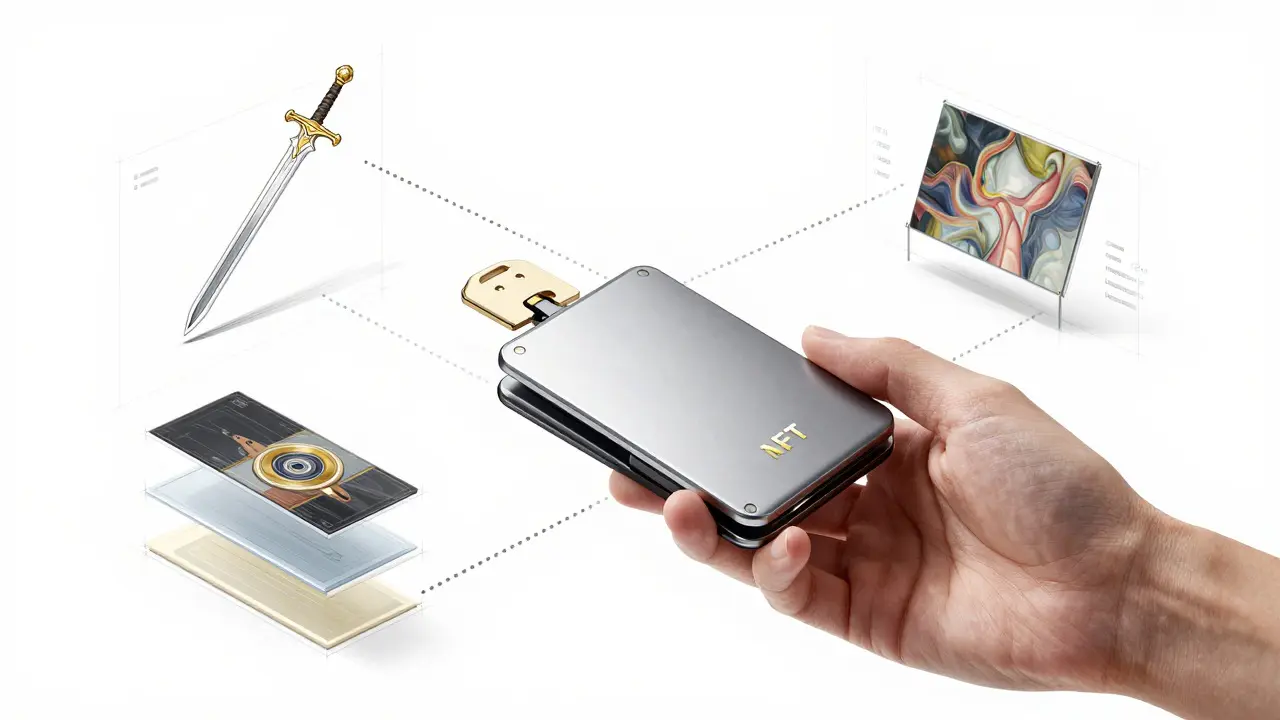
In Web3 games like Pixels or Lumiterra, assets are often minted as Non-Fungible Tokens (NFTs). This means if you buy a virtual farm plot, you hold the token in your wallet. You can sell it on an open market, use it as collateral for a loan, or even potentially move it to a compatible game engine. In 2024, secondary sales in Web3 gaming generated $1.7 billion, proving that players are willing to pay for true ownership, even if the graphics sometimes lag behind AAA Web2 titles.
Social media tells a similar story. Platforms like Twitter (now X) rely on corporate curation. In the Web3 space, protocols like Lens Protocol allow users to build social graphs that aren’t owned by a CEO. Content moderation happens through community governance rather than top-down decisions. While still early, this approach prevents the sudden deplatforming of users based on political or commercial disagreements.
The Trade-Offs: Speed, Cost, and Security
Nothing is free, and moving to Web3 introduces new challenges. The biggest hurdle is user experience. Setting up a Web2 account takes seconds-email and password. Setting up a Web3 wallet requires managing private keys, understanding gas fees, and navigating complex interfaces. Consensys reported that 89% of potential users drop off during the wallet creation process. That’s a massive friction point.
Security models also differ. In Web2, if you lose your password, you reset it. The platform holds the backup. In Web3, if you lose your private key, your assets are gone forever. There is no customer support line to call. Conversely, Web2 platforms are vulnerable to centralized hacks. When Uber’s servers crashed in 2022, 3.2 million drivers were stranded for 47 minutes. In Web3, a network outage is rare because there is no single server to fail, though smart contract bugs remain a risk, with $1.8 billion lost to exploits in 2024 alone.
Cost is another factor. Web2 payments are cheap and instant via Stripe or PayPal. Web3 transactions incur “gas fees” to pay network validators. While Ethereum fees were notoriously high, Layer-2 solutions like Arbitrum have reduced costs to fractions of a cent, making everyday micro-transactions viable for the first time.
Who Is Winning Right Now?
It’s not a zero-sum game. As of 2025, Web2 remains dominant, serving approximately 4.9 billion active users. However, Web3 has grown to 153 million unique active wallets, a 37% year-over-year increase. The adoption curve is steepening. Web2 took seven years to hit one billion users; Web3 achieved that milestone in four.
Interestingly, the lines are blurring. Major Web2 companies are integrating Web3 features. Reddit launched blockchain-based community points used by 18.2 million users. Twitter integrated tipping via Ethereum and Polygon. This hybrid approach suggests that pure decentralization isn’t the only path forward. Many users will continue to use familiar Web2 interfaces while holding Web3 assets underneath.
For developers, the skill sets are overlapping but distinct. Web2 development focuses heavily on JavaScript, React, and backend APIs. Web3 adds layers of complexity: Solidity for smart contracts, IPFS for storage, and wallet integration libraries. Electric Capital’s 2024 survey found that 78% of Web3 engineers previously worked in Web2 roles, indicating that the talent pool is migrating rather than forming entirely anew.
What Does the Future Look Like?
The future likely involves a layered internet. Critical infrastructure-identity, payments, and asset custody-may migrate to Web3 for its resilience and ownership benefits. Meanwhile, content delivery and social interaction may remain on Web2-style architectures for speed and ease of use, but connected to decentralized backends.
Regulation is the wildcard. The U.S. SEC filed 17 enforcement actions against crypto projects in Q1 2025, creating uncertainty. Europe’s MiCA regulations, implemented in January 2024, provide clearer guidelines but slowed initial adoption by 31%. As rules stabilize, enterprise adoption is accelerating, with 68% of Fortune 500 companies now maintaining blockchain initiatives. The focus is shifting from speculative trading to utility: supply chain tracking, decentralized identity, and creator economy tools are growing 220% year-over-year.
You don’t need to choose one side. Understanding both allows you to leverage the speed of Web2 when convenience matters and the security of Web3 when ownership matters. The internet is evolving into a hybrid ecosystem, and being literate in both models is the most valuable skill set you can develop right now.
Is Web3 faster than Web2?
Generally, no. Web2 offers sub-second response times due to centralized processing. Web3 transactions take longer (2.5 to 15+ seconds) because multiple nodes must agree on the transaction's validity. However, Layer-2 solutions are closing this gap significantly.
Do I need to buy cryptocurrency to use Web3?
Not always. Some Web3 apps use “gasless” transactions where the platform pays the fee. However, for full functionality, especially in DeFi or gaming, you usually need a small amount of the native token (like ETH or SOL) to cover network costs.
What is the main benefit of Web3 for regular users?
The primary benefit is ownership. You control your data, digital assets, and identity without relying on a third-party company to maintain them. This prevents censorship, data breaches affecting your personal info, and loss of access due to platform shutdowns.
Can Web2 and Web3 coexist?
Yes, and they already do. Many modern apps use a hybrid model, offering a familiar Web2 interface (easy login, fast UI) while storing critical assets or identity on a Web3 blockchain. This provides the best of both worlds: usability and sovereignty.
Which is safer: Web2 or Web3?
It depends on the threat. Web2 is safer against user error (you can reset passwords) but riskier against corporate failure or centralized hacks. Web3 is safer against censorship and single-point failures but riskier against user error (lost keys) and smart contract bugs.