
What is Efinity Token (EFI) Crypto Coin? A Clear Breakdown of Its Use, Supply, and Role in NFTs
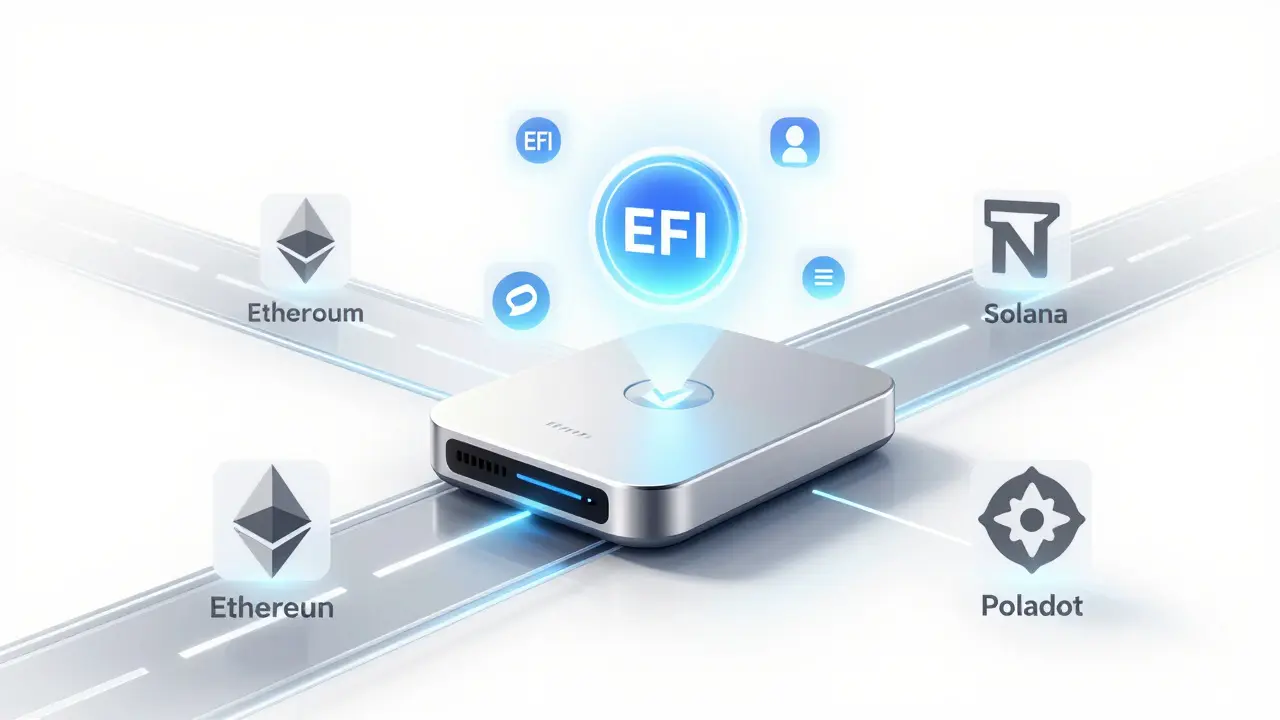
Ever wonder how NFTs can move smoothly between games, marketplaces, and blockchains without you needing a wallet or paying $50 in gas fees? That’s where Efinity Token (EFI) comes in. It’s not just another crypto coin. EFI is the engine behind a blockchain built from the ground up to make NFTs work like regular apps - fast, cheap, and for everyone.
What Exactly Is Efinity Token (EFI)?
Efinity Token (EFI) is the native currency of the Efinity network, a specialized blockchain designed solely for non-fungible tokens (NFTs). Unlike Bitcoin or Ethereum, which handle payments, smart contracts, and more, Efinity does one thing and does it well: move NFTs. It was created by Enjin, the same team that invented the ERC-1155 token standard - the backbone of most gaming NFTs today.
Launched in March 2022 after winning a Polkadot parachain auction in late 2021, Efinity isn’t trying to be a general-purpose blockchain. It’s an NFT highway. Think of it like a dedicated express lane for digital collectibles, game items, and digital art - no traffic, no delays, no crazy fees.
How Many EFI Tokens Are There?
The total supply of EFI is capped at exactly 2 billion coins. That’s a fixed number - no more will ever be created. Here’s how they’re distributed as of March 2026:
- 20% went to investors (public and private sales)
- 30% to Enjin’s team and company (10% team, 20% company)
- 15% reserved for staking rewards
- 35% for ecosystem growth - developers, partnerships, grants
As of today, the fully diluted valuation (FDV) of Efinity sits at BTC 6,733.1276. That’s the theoretical max market cap if every single EFI coin were in circulation and priced the same. But here’s the catch: not all coins are out yet. The emission schedule is controlled by community votes, meaning the actual circulating supply grows slowly over time.
What Can You Do With EFI?
EFI isn’t just a trading asset. It’s the fuel that keeps the Efinity network running. Here’s what you can actually do with it:
- Pay transaction fees - Every time you list an NFT, trade it, or transfer it, you pay a tiny fee in EFI. But here’s the twist: most users never pay directly.
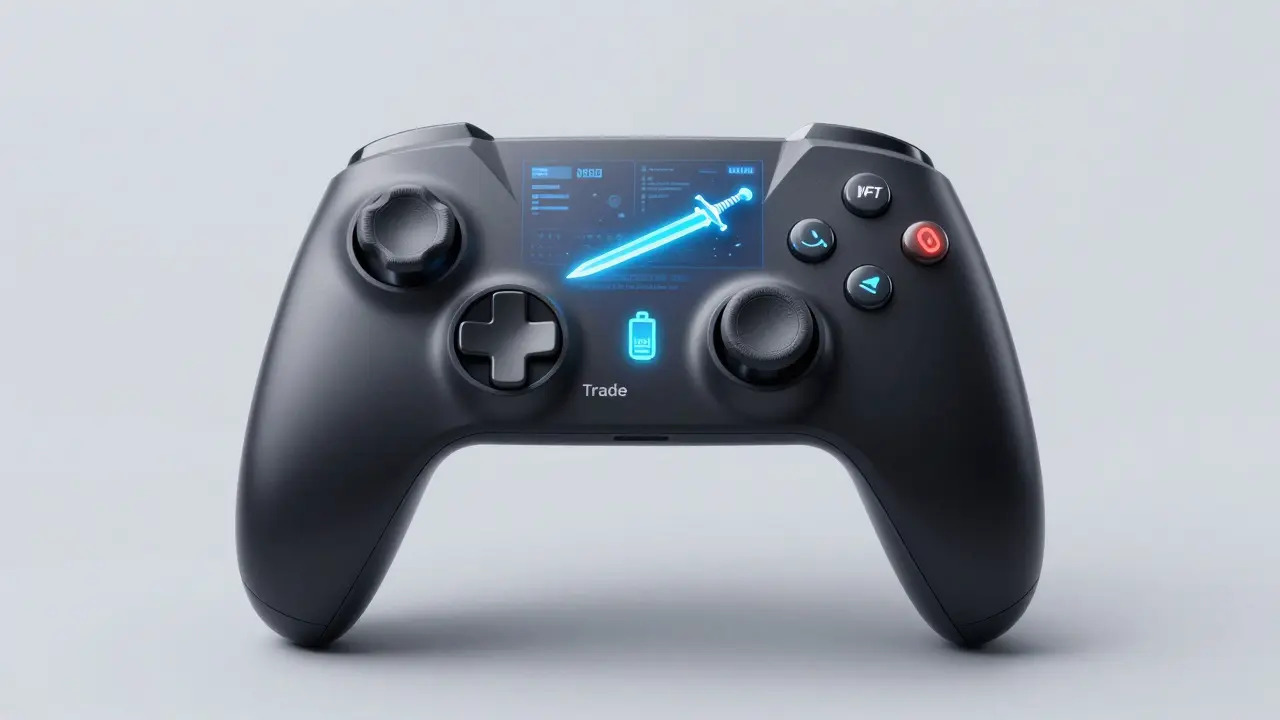
- Use Fuel Tanks - This is Efinity’s secret sauce. A wallet or game can hold a pool of EFI to cover transaction costs for users. So if you’re playing a game and want to trade a sword, the game company pays the fee - not you. No wallet needed.
- Stake EFI - You can lock up your EFI to earn more. Stakers help secure the network and get rewarded with additional tokens.
- Vote on network changes - If someone proposes a new feature, upgrade, or rule change, EFI holders vote on it. One token, one vote.
- Buy and sell NFTs - You need EFI to list items on Efinity’s marketplace or to purchase them.
- Access Efinity Swap - Want to turn an Ethereum NFT into a Polkadot NFT? Efinity Swap automatically converts it without you needing to manually trade or bridge assets.
Why Is Efinity So Fast?
Efinity processes 700 to 1,000 transactions per second. Compare that to Ethereum, which handles about 15. That’s why games and apps can’t use Ethereum for real-time NFT trading - it’s too slow and expensive.
Confirmation times? Just 6 seconds. That’s faster than most credit card payments. This speed comes from Efinity being a parachain on Polkadot. Instead of building its own security, it borrows it from Polkadot’s network of validators. That means:
- It’s secure - backed by one of the most robust networks in crypto
- It’s cheap - no need to pay for mining or proof-of-work
- It’s scalable - can grow without slowing down
Plus, Efinity uses proof-of-stake (PoS), not proof-of-work. No energy-hungry miners. It’s green by design.
How Does Cross-Chain Work?
You can bring NFTs from Ethereum, Solana, or any other chain into Efinity. Just connect your wallet, click a button, and your ERC-721 or ERC-1155 token gets imported. Once on Efinity, it gains new powers:
- Instant trading without gas fees
- Ability to be used in games or apps that only support Efinity
- Access to Efinity’s crafting system - turn a basic NFT into a rare one using recipes
For example, imagine you own a rare sword from an Ethereum game. You import it to Efinity, then use it in a new multiplayer game that runs on Efinity. No extra purchase. No bridge fees. Just play.
Who’s Behind Efinity?
Enjin, founded in 2009, has been in the NFT space since before it was called NFTs. They created the ERC-1155 standard, which lets one smart contract handle thousands of unique items - perfect for games with hundreds of weapons, skins, or characters.
Enjin also runs JumpNet, a test network for Efinity, and NFT.io, a marketplace where users can earn exclusive NFTs just by using the platform. Efinity is the core of their vision: make NFTs as easy to use as a smartphone app.
What Makes Efinity Different?
Most blockchains try to do everything. Efinity does one thing: NFTs. And it does it better than anyone else.
| Feature | Efinity | Ethereum | Solana |
|---|---|---|---|
| Transactions per second | 700-1,000 | 15 | 50,000 |
| Confirmation time | 6 seconds | 15-30 seconds | 2-4 seconds |
| Gas fees for NFT trades | Often $0 (via Fuel Tanks) | $5-$50+ | $0.01-$0.10 |
| Native cross-chain support | Yes (built-in) | No (requires bridges) | Yes (but limited) |
| Wallet required for users? | No | Yes | Yes |
| Energy use | Low (PoS) | High (was PoW, now PoS) | Low (PoS) |
That last row - no wallet needed - is huge. Most NFT platforms force users to install MetaMask or Phantom. Efinity lets apps handle everything behind the scenes. You just click "trade" or "claim" and you’re done.
Is Efinity Still Growing?
Yes. Since launch, it’s added:
- Integration with over 100 games and apps
- Partnerships with enterprise NFT platforms
- Expanded governance tools for community voting
- Developer grants to build new NFT tools
Enjin’s long-term goal? Make NFTs as common as email. If you can send a file, you should be able to send a digital item - no technical knowledge needed. Efinity is the infrastructure making that possible.
Final Thoughts
Efinity Token (EFI) isn’t a speculative coin you buy hoping it’ll double. It’s a utility token powering a real, working network. If you’re a gamer, creator, or developer, you’ll interact with EFI without even knowing it - through games, apps, and marketplaces that use Efinity’s speed and simplicity.
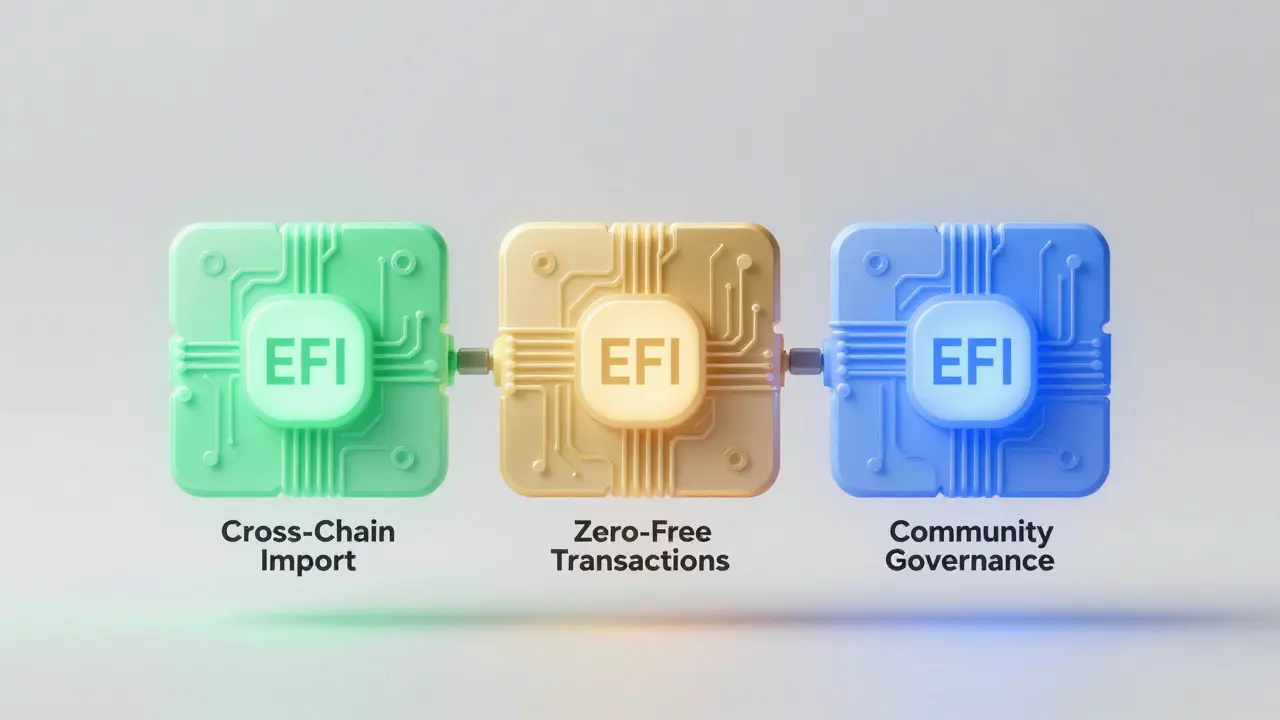
Its combination of speed, zero-fees for end users, cross-chain flexibility, and community governance makes it one of the most practical blockchains for NFTs today. And with its fixed supply and growing adoption, it’s positioned to play a central role in the next wave of digital ownership.
Is Efinity Token (EFI) a good investment?
EFI isn’t designed as a speculative asset. Its value comes from real usage - paying fees, staking, and voting. If the network grows and more apps use it, demand for EFI will rise. But unlike some coins, there’s no hype cycle or marketing push. Its value is tied to how many people actually use the network, not how many people are buying the token.
Can I buy EFI on Coinbase or Binance?
Yes, EFI is listed on major exchanges like Binance, Coinbase, and Kraken. But remember: buying EFI doesn’t give you access to Efinity’s features. You need to use the network through apps like NFT.io or supported games to experience its real utility.
Do I need a wallet to use Efinity?
No. That’s one of its biggest advantages. Apps and games can use "Fuel Tanks" to pay for transactions on your behalf. You just log in with your email or social account - no crypto wallet required. This makes it easy for mainstream users who aren’t tech-savvy.
How does Efinity compare to Flow or Polygon for NFTs?
Flow and Polygon are also NFT-focused, but they’re general-purpose chains with broader use cases. Efinity is laser-focused on NFTs and cross-chain movement. It has deeper integration with Enjin’s tools, better cross-chain bridges, and a unique Fuel Tank system that eliminates fees for end users - something Flow and Polygon don’t offer natively.
What happens if Efinity’s governance votes to change the token supply?
The total supply of 2 billion EFI is locked in code. No vote can change it. What can be voted on is how and when tokens are released into circulation - like speeding up staking rewards or delaying ecosystem funding. But the max supply? Fixed forever.
Mansoor ahamed
March 22, 2026 AT 18:17Jeannie LaCroix
March 24, 2026 AT 16:57Domenic Dawson
March 26, 2026 AT 11:10Sam Harajly
March 27, 2026 AT 07:46Pradip Solanki
March 27, 2026 AT 17:22Brad Zenner
March 29, 2026 AT 07:38Tony Phillips
March 30, 2026 AT 21:05Abhishek Thakur
March 31, 2026 AT 09:01Jackie Crusenberry
April 1, 2026 AT 23:16Alice Clancy
April 2, 2026 AT 12:51Dominic Taylor
April 4, 2026 AT 11:52Aman Kulshreshtha
April 5, 2026 AT 11:58Kevion Daley
April 5, 2026 AT 13:41Tammy Stevens
April 6, 2026 AT 21:11Justin Credible
April 7, 2026 AT 03:15Dheeraj Singh
April 8, 2026 AT 14:53Mike Yobra
April 9, 2026 AT 13:48Nicolette Lutzi
April 9, 2026 AT 20:37Neil MacLeod
April 11, 2026 AT 08:13Mohammed Tahseen Shaikh
April 12, 2026 AT 08:22Sarah Terry
April 14, 2026 AT 07:46Shayne Cokerdem
April 15, 2026 AT 02:28John Alde
April 15, 2026 AT 16:51JOHN NGEH
April 17, 2026 AT 07:10vu phung
April 18, 2026 AT 09:42Joshua T Berglan
April 19, 2026 AT 09:50Kevin Da silva
April 20, 2026 AT 21:14