
What is Roseon (ROSX)? Token Utility, Ecosystem & Risks Explained
You’ve likely seen the ticker ROSX pop up on a tracker or heard whispers about a platform that mixes trading with video games. But what actually is Roseon? Is it the next big thing in decentralized finance, or just another speculative asset with a flashy name? Understanding Roseon means looking past the marketing buzzwords like "AI-powered" and "Play-to-Earn" to see the raw mechanics of the project.
Roseon positions itself as a multifaceted ecosystem built primarily on the Arbitrum network. It aims to bridge the gap between complex financial derivatives and casual gaming. The core engine of this machine is the ROSX token. Before you consider buying or staking, you need to understand exactly what this token does, where it lives on the blockchain, and why its price history tells a story of extreme volatility.
The Core Identity: What Is Roseon?
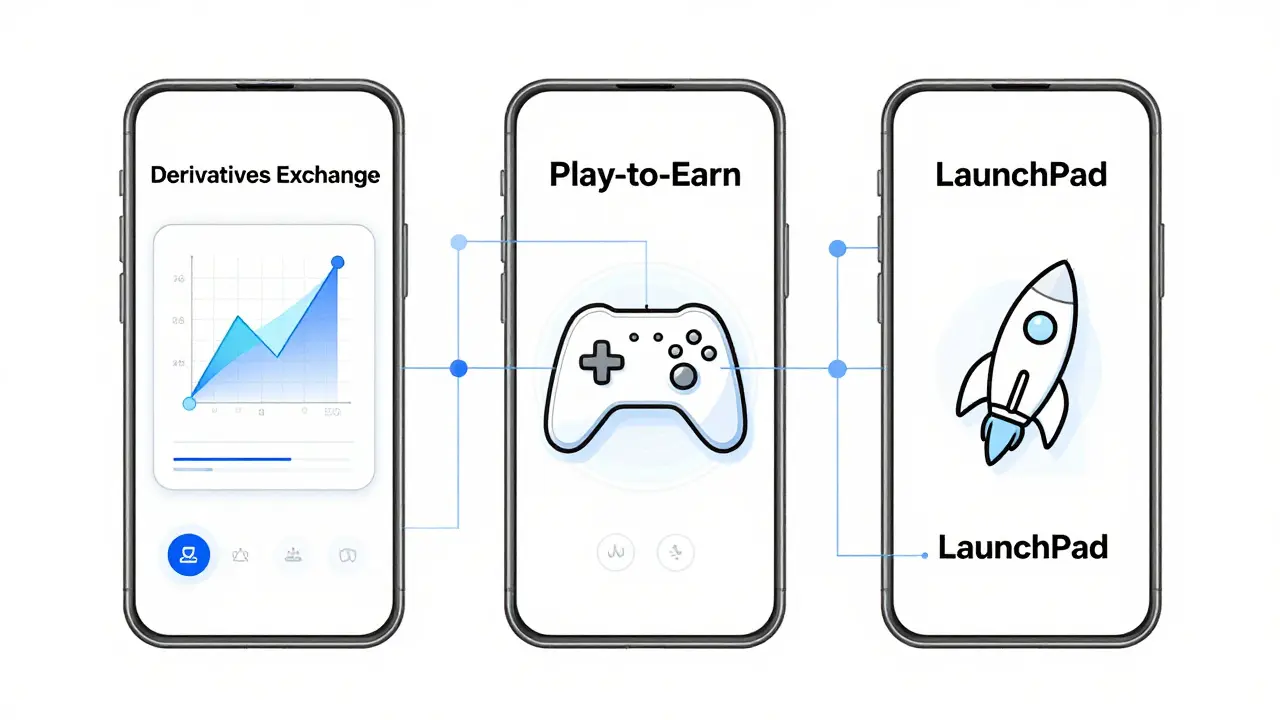
Roseon is a decentralized gamified derivatives exchange and ecosystem operating on the Arbitrum Layer-2 network. Unlike traditional exchanges that focus solely on spot trading, Roseon attempts to create a lifestyle brand around crypto. It combines three distinct pillars: a LaunchPad for new token offerings, decentralized finance (DeFi) services for yield generation, and Play-to-Earn (P2E) games.
The platform operates through two main products. First, there is RoseonX, described as an AI-powered exchange with modular architecture. This suggests the use of artificial intelligence to assist with trading recommendations or risk management, though specific technical documentation on these AI models is scarce. Second, there is RoseonApp, a mobile-first application designed to be a one-stop shop for trading, earning yields, and accessing mini-games.
The underlying technology relies heavily on Arbitrum, an Ethereum Layer-2 scaling solution. By deploying its smart contracts on Arbitrum, Roseon aims to offer faster transaction speeds and lower gas fees compared to the Ethereum mainnet. This infrastructure choice is critical for a derivatives and gaming platform, where high-frequency interactions can become prohibitively expensive on base layer chains.
Tokenomics: Supply, Circulation, and Utility
The value proposition of any utility token rests on its scarcity and usefulness. For ROSX, the data presents some inconsistencies that require careful scrutiny. According to CoinMarketCap, the total supply of ROSX is approximately 107.46 million tokens. However, other aggregators like Kriptomat report a circulating supply closer to 89.7 million tokens. These discrepancies are common in micro-cap assets and often stem from different methods of calculating locked or burned tokens.
| Metric | CoinMarketCap Data | Kriptomat/Coinbase Data |
|---|---|---|
| Total Supply | 107.46 Million | Not Specified / ~107M implied |
| Circulating Supply | 107.46 Million | ~89.7 Million |
| Max Supply | Not Specified | Not Specified |
| Primary Network | Arbitrum (ERC-20 compatible) | Arbitrum |
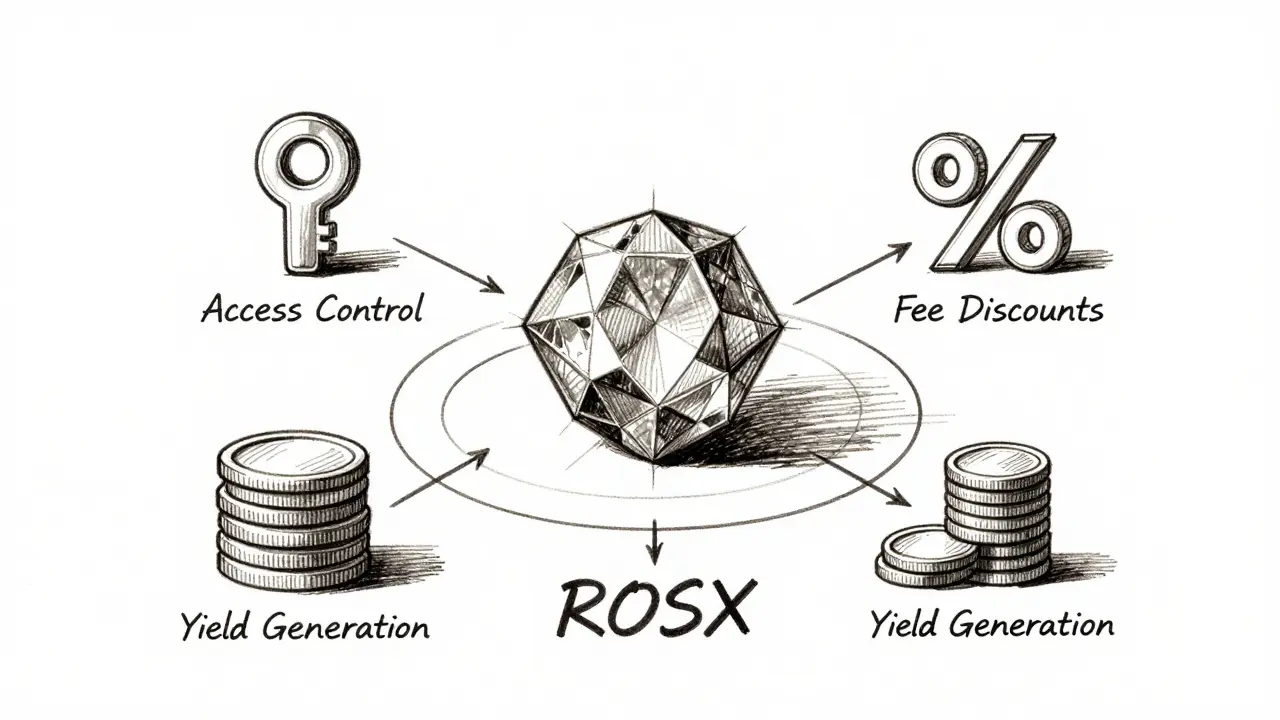
Why do you hold ROSX? The token serves four primary functions within the ecosystem:
- Access Control: Registered users need ROSX to participate in loyalty programs and access certain premium features of the LaunchPad.
- Fee Discounts: Holding or staking ROSX can reduce trading fees on the RoseonX exchange, a standard mechanism in crypto derivatives platforms to encourage liquidity provision.
- Governance Rights: Token holders may have voting power over specific aspects of the platform’s development, although the scope of this governance is not fully detailed in public audits.
- Yield Generation: Users can stake or lend ROSX to earn passive income, integrating the token into broader DeFi yield strategies.
Price History and Market Reality
If you look at the charts, the picture is stark. ROSX is currently classified as a micro-cap asset. Recent data points show a market capitalization hovering between $47,000 and $54,000 USD. To put that in perspective, this is less than the revenue of a small local business. In the world of cryptocurrency, where Bitcoin has a market cap in the trillions, this places Roseon firmly in the niche, high-risk category.
The price action has been equally dramatic. Coinbase data indicates that ROSX is down approximately 99.91% from its all-time high (ATH). Depending on the data source, the ATH was recorded between $0.13 and $0.60 USD. Currently, the token trades for fractions of a cent, often below $0.001 USD. ChainBroker lists a current price around $0.00064, while Kriptomat shows similar figures in EUR.
This massive drawdown raises important questions. Did the project fail to deliver? Was the initial valuation inflated by hype? Or did it simply get caught in a broader market downturn? Without transparent communication from the team regarding user growth or volume metrics during this decline, investors are left speculating. The low trading volume-often under $1,500 in 24-hour turnover on major trackers-further highlights the lack of deep liquidity. Buying or selling large amounts of ROSX could significantly impact the price due to thin order books.
How to Buy and Use ROSX
Accessibility is a mixed bag for ROSX. You won’t find it listed for direct trading on major centralized exchanges like Coinbase, which explicitly states that the asset is not tradable on their platform. This limits easy fiat-on-ramps for many retail users in regulated jurisdictions.
However, options do exist. Platforms like Kriptomat allow for immediate purchase using fiat currencies such as the Euro. For those comfortable with decentralized finance, ROSX is available on the Arbitrum network via decentralized exchanges (DEXs). This requires you to have a Web3 wallet (like MetaMask), fund it with ETH or ARB, bridge assets to Arbitrum, and swap for ROSX using the contract address provided by reliable sources.
Once acquired, the utility depends on your engagement level. If you are interested in the P2E aspect, you would download the RoseonApp and connect your wallet. Here, the gamification element comes into play, offering rewards tied to gameplay and trading activity. If you prefer passive holding, you might explore staking options listed on aggregators like StakingRewards, which confirm that both staking and lending protocols support ROSX, albeit without specifying exact Annual Percentage Yields (APYs) in general summaries.
Risks and Considerations
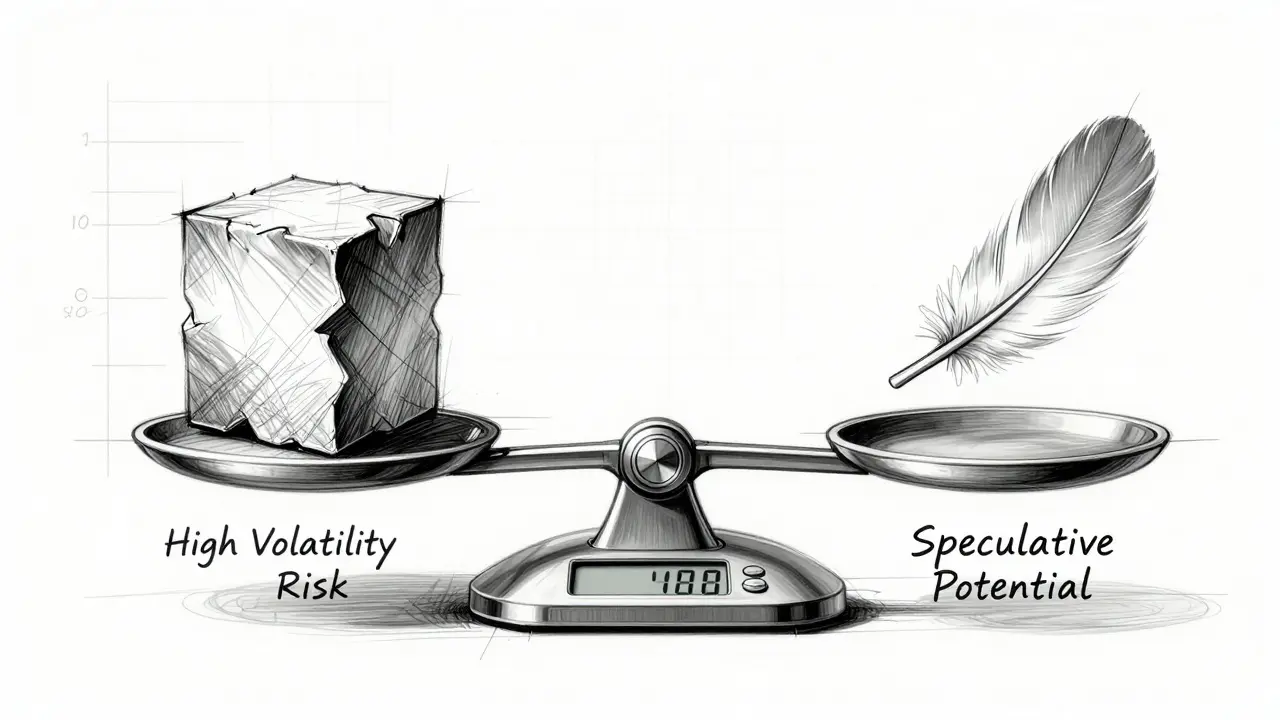
Investing in micro-cap tokens like ROSX carries significant risks that cannot be overstated. First, there is the issue of transparency. While the project describes itself as having an "AI-powered" engine, there is no public whitepaper or technical audit detailing how this AI functions. In crypto, vague claims about AI often serve as marketing fluff rather than substantive technological advantages.
Second, the regulatory landscape remains uncertain. Derivatives trading, especially when combined with gaming elements, attracts scrutiny from financial regulators worldwide. There is no clear information on whether Roseon holds specific licenses or complies with frameworks like MiCA in Europe or SEC guidelines in the US. This regulatory ambiguity poses a long-term threat to the platform’s viability.
Third, the concentration of risk is high. With a market cap under $100k, the project is highly susceptible to manipulation. A single large trade can swing the price by double-digit percentages. Furthermore, the lack of institutional interest or analyst coverage means there is no safety net if things go wrong. You are relying entirely on the integrity and competence of the anonymous or semi-anonymous development team.
Is Roseon Worth Your Attention?
Roseon represents a specific slice of the crypto pie: the intersection of gamification and derivatives. For early adopters who enjoy experimenting with new DeFi interfaces and P2E mechanics, it offers a sandbox to test these concepts. The integration with Arbitrum ensures that the technical experience is smoother than older Ethereum-based dApps.
However, for serious investors seeking stability or proven returns, ROSX falls short. The extreme price depreciation, low liquidity, and lack of transparent fundamental data make it a speculative bet rather than an investment. If you decide to engage with the ecosystem, treat it as high-risk entertainment spending rather than capital preservation. Always verify contract addresses directly from official channels, never rely solely on third-party aggregators for security-critical information, and never invest more than you can afford to lose completely.
What blockchain is Roseon (ROSX) built on?
Roseon is primarily built on the Arbitrum network, which is a Layer-2 scaling solution for Ethereum. This allows for faster transactions and lower fees compared to the Ethereum mainnet.
Can I buy ROSX on Coinbase?
No, Coinbase explicitly states that Roseon (ROSX) is not tradable on their platform. They track the price data, but you cannot buy or sell it directly there. You may find it on other centralized exchanges like Kriptomat or via decentralized exchanges on Arbitrum.
What is the total supply of ROSX?
According to CoinMarketCap, the total supply is approximately 107.46 million ROSX. However, circulating supply figures vary across platforms, with some reporting around 89.7 million tokens in active circulation.
Is Roseon a safe investment?
ROSX is considered a high-risk, micro-cap asset. It has experienced a drop of over 99% from its all-time high and has very low trading volume. There is limited transparency regarding its AI claims and regulatory status. It should only be approached with extreme caution and funds you are willing to lose.
What are the main products of the Roseon ecosystem?
The ecosystem consists mainly of RoseonX, an AI-powered derivatives exchange, and RoseonApp, a mobile application for trading, earning yields, and playing Play-to-Earn (P2E) games. It also includes a LaunchPad for new token offerings.
Mekz Wheoki
June 9, 2026 AT 12:21Oh look, another 'AI-powered' rug pull waiting to happen. 🙄 The fact that it's down 99.9% from ATH should be the only data point you need. Save your money and buy a coffee instead.
Rob Aronson
June 10, 2026 AT 10:30The arbitrage opportunities on Arbitrum L2 are actually quite interesting if you ignore the tokenomics for a second. The gas efficiency allows for high-frequency micro-trades that aren't viable on mainnet ETH. However, the liquidity depth is practically non-existent, which creates massive slippage risk for any meaningful position sizing. 📉🤖
Fede Faith
June 10, 2026 AT 12:42I've been watching this space closely because the P2E mechanic is genuinely cool if you strip away the financial speculation. It’s just a game with crypto rewards. But yeah, don’t treat it like an investment portfolio. Treat it like buying a skin in Fortnite but with higher stakes. Stay safe out there! 💪
Grace Newman
June 10, 2026 AT 15:42One must consider the regulatory implications of such opaque structures. The lack of MiCA compliance suggests a deliberate evasion of oversight by entities potentially operating outside jurisdictional boundaries. This is not merely a technical failure but a systemic issue within decentralized finance protocols that prioritize anonymity over accountability. Proceed with extreme caution regarding legal liabilities.
John Doe
June 11, 2026 AT 07:14It honestly breaks my heart to see people lose their savings on these micro-caps. I know the hype is real and the FOMO is strong, but please remember that most of these projects vanish into thin air. It’s not just about losing money; it’s about the emotional toll it takes on families who thought they found a golden ticket. Be kind to yourself and walk away if it feels wrong. ❤️
Kenneth Riley
June 11, 2026 AT 08:05the whole ai narrative is bullshit man. they slap ai on everything now to pump the price. look at the code its probably just a simple script wrapped in fancy words. typical dev team scam. dont fall for it.
Josh Dodson
June 12, 2026 AT 17:56hey guys i think its still early right? maybe we can catch the bottom? i heard some good things bout the app interface. lets hope for the best! 🚀
Mekz Wheoki
June 13, 2026 AT 23:56@Josh Dodson You’re exactly why retail gets rekt. ‘Hope’ is not a strategy. Go touch grass.
Danna Charris
June 14, 2026 AT 13:53Truly fascinating how uneducated investors continue to flock to these digital snake oils. One would assume basic due diligence is a prerequisite for entering this market, yet here we are. Simply pathetic.
Suman Patil
June 16, 2026 AT 00:20Let’s keep the vibe positive everyone! 🌟 The tech stack on Arbitrum is solid, and innovation takes time. We are building something special here. Let’s support each other and learn from the journey. Together we rise! 💪✨
Annemarie Fitzgerald
June 16, 2026 AT 11:01Is it possible that the concept of value itself is flawed in this context? Or perhaps we are merely observing the inevitable decay of meaning in a post-truth digital economy. I feel like i am screaming into the void but nobody listens. The silence is deafening really. 😔
Abby Sivertsen
June 17, 2026 AT 02:47Look, I get the skepticism, but have you actually tried the app? It runs smooth. That’s gotta count for something. Not everyone is trying to get rich quick; some of us just want to play games without lagging. Chill out.
Mark Brunschwiler
June 17, 2026 AT 10:20Why do you all care so much? My life is hard enough without reading about your crypto losses. I just want to watch the world burn quietly. It’s funny really how serious you all take these fake numbers. Just sad.
Sonya O'Brien
June 18, 2026 AT 12:17I think it is important to acknowledge that while the risks are certainly significant and perhaps even overwhelming for the average participant, there is a nuanced perspective to be had regarding the technological infrastructure that underpins these platforms, which, despite the current market sentiment being overwhelmingly negative and dismissive of the project’s long-term viability, may still hold potential for future development and integration into broader ecosystems if the team manages to navigate the complex regulatory landscape successfully and establish trust with the community through transparent communication and consistent updates regarding their progress and challenges.
Filbert Reeves
June 19, 2026 AT 03:06they are definitely tracking our wallets. its not a coincidence that the price drops when big influencers talk about it. controlled manipulation. wake up sheeple. the whole thing is a psyop to drain liquidity from small holders. i told you last year but no one listened. now look at the charts. its all rigged against us poor people.
Kumaran sowkarpet
June 19, 2026 AT 08:00hello friends :) i am from india and we love crypto here. this project seems risky but maybe we can learn something new. please be careful with your money ok? stay safe and happy trading! 🇮🇳💰
Mauricio Contreras Loredo
June 20, 2026 AT 12:32Sure, let’s pretend the 99% drop was just a ‘market correction’. Classic. Nothing says ‘stable ecosystem’ like trading volume lower than my grocery bill. Enjoy the dip, folks! 🎢
Skm Shubham
June 22, 2026 AT 05:42The tokenomics are fundamentally broken. No clear utility beyond fee discounts on a platform with zero volume. It’s a classic death spiral scenario. Anyone holding this is either a whale dumping or a victim of misinformation. Pure waste of time analyzing garbage.
Benjamin Eisen
June 23, 2026 AT 09:42i mean maybe the devs are working on something big behind closed doors? sometimes quiet periods lead to huge announcements. lets give them the benefit of the doubt right? could be a gem in the rough. ✨
Kwon Bill
June 24, 2026 AT 11:22In the Asian markets, we often see similar patterns with Layer-2 gaming tokens. The key metric to watch isn’t price, but daily active users (DAU) on the chain. If DAU is rising while price stagnates, accumulation might be happening. However, without on-chain analytics tools, this is speculative. The cultural shift towards Play-to-Earn is real, but execution is rare. 🌏📊
ravi mahla
June 25, 2026 AT 17:07haha nice try bro. you think we dont see the red flags? lol. keep dreaming. 🤡