Blockchain.io Crypto Exchange Review: Is It Safe in 2026?

Remember the hype of 2018? That was when Blockchain.io promised to become "The European cryptocurrency exchange of trust." If you are looking at this name today, six years later, you might be wondering if that promise ever materialized or if the platform is still a ghost town. The short answer is unsettling for anyone holding funds there: Blockchain.io has virtually disappeared from the public eye.
There are zero user ratings on major tracking sites like TrustFinance. There is no active social media presence. And while its parent company, Paymium, still exists, the Blockchain.io brand itself seems to have stalled after its initial coin offering (ICO). This review cuts through the noise to tell you exactly where this project stands in 2026, why it matters to understand its history with Paymium, and whether your money is safe.
The Origin Story: Paymium and the 2018 ICO Boom
To understand Blockchain.io, you have to look back at its roots. It wasn't just some random startup; it was born out of Paymium, one of Europe's oldest Bitcoin exchanges. Founded in Paris in 2011 by Pierre Noizat, Paymium was a pioneer in letting Europeans trade Euros for Bitcoin long before Coinbase went mainstream.
In 2017 and 2018, the crypto world was obsessed with Initial Coin Offerings (ICOs). Companies would sell tokens to raise capital before their products were even fully built. Blockchain.io launched during this fever dream. They announced a new utility token called BCIO and marketed themselves as a compliant, secure upgrade to traditional trading. The goal was ambitious: create a centralized exchange that offered deep liquidity, strong security via cold storage, and regulatory compliance within the EU.
But here is the catch. While the whitepaper looked professional and the team had experience, the actual launch never gained the traction they predicted. By 2026, the silence surrounding the brand is deafening compared to the noise of 2018.
Is Blockchain.io Still Operational?
This is the most critical question for any potential user. As of mid-2026, there is no clear evidence that Blockchain.io operates as an active, high-volume trading venue. When you check independent verification platforms like TrustFinance, the profile for Blockchain.io is essentially empty. It explicitly asks visitors to "be the first to provide a user rating."
Think about what that means. Major exchanges like Binance, Kraken, or even regional competitors like Bitstamp have thousands of reviews-both good and bad. An exchange with zero ratings suggests one of two things: either nobody is using it, or it hasn't been updated in years. In the fast-moving world of crypto, silence usually equals dormancy.
If you try to access the site today, you may find it functioning technically, but without the liquidity, support teams, or daily updates that define a healthy exchange. For a trader, an exchange without volume is useless because you can't buy or sell assets quickly without massive price slippage.
The BCIO Token: What Happened to the Utility?
During the ICO phase, the BCIO token was sold as a key feature. Holders were promised discounted trading fees, loyalty rewards, and potentially a say in future token listings. This model mimicked successful tokens like BNB (Binance Coin) or KCS (KuCoin Token).
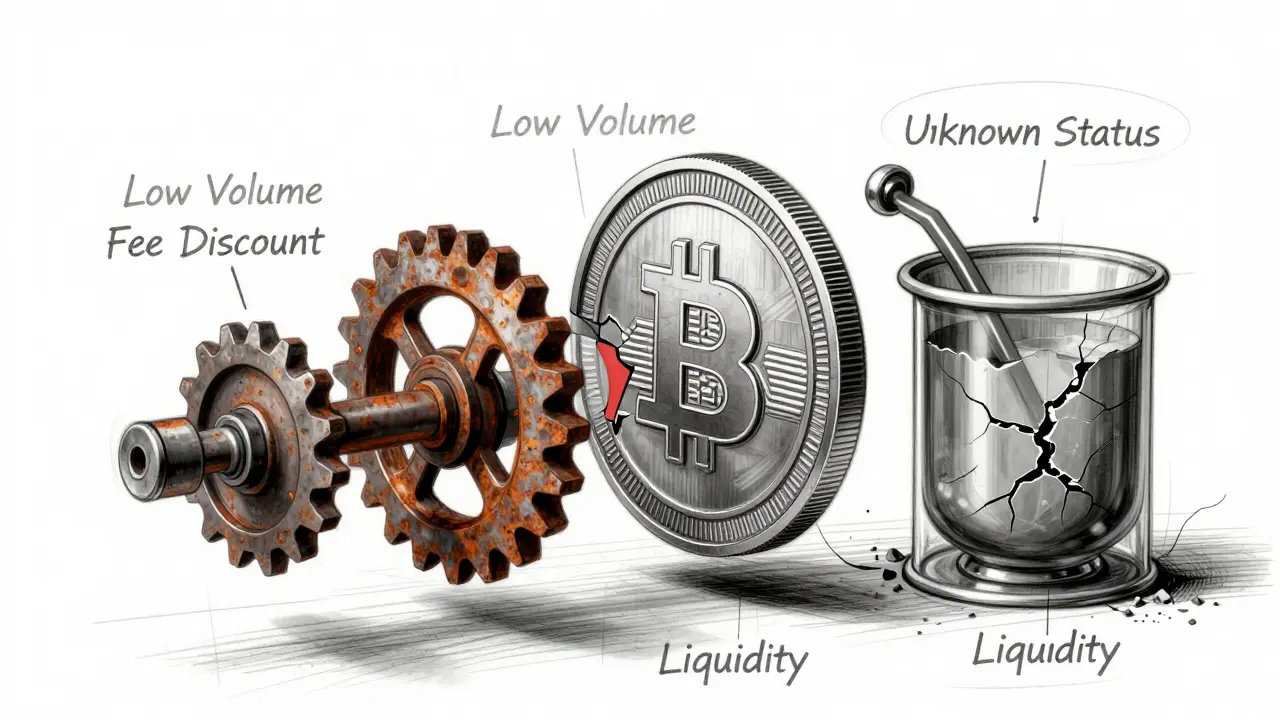
| Feature | 2018 Promise | 2026 Status |
|---|---|---|
| Fee Discounts | Reduced maker/taker fees for holders | Unknown / Likely inactive due to low volume |
| Governance Rights | Voting on new listings | No evidence of recent governance events |
| Liquidity | Deep market depth | Extremely low or non-existent |
| Market Presence | Listed on major trackers | Hard to find reliable price data |
Today, the value of BCIO is questionable. Without an active trading engine driving volume, fee discounts don't matter much because there are few trades to make. Furthermore, many ICO-era tokens lost significant value as the market matured and investors moved toward more transparent decentralized finance (DeFi) protocols or established centralized exchanges with proven track records.
Security and Compliance: The European Angle
One of Blockchain.io's main selling points was its connection to Paymium and its focus on European regulations. France has strict Anti-Money Laundering (AML) and Know Your Customer (KYC) laws. Theoretically, this should make Blockchain.io safer than unregulated offshore exchanges.
However, "compliance" requires active maintenance. Regulations change. Licenses need renewal. Security audits must be repeated. With no recent news from Blockchain.io, we cannot confirm if their security infrastructure is up to date. Do they still use multi-signature cold wallets? Are their hot wallets insured? We simply don't know.
In contrast, modern exchanges publish regular proof-of-reserves audits so users can verify that the exchange actually holds the assets it claims. Blockchain.io does not appear to do this publicly anymore. This lack of transparency is a major red flag in 2026, where user protection is paramount.
How It Compares to Modern Alternatives
If you are looking for a safe, compliant European exchange, Blockchain.io is likely not the best choice anymore. Let's compare it to current market leaders.
| Feature | Blockchain.io | Kraken / Coinbase |
|---|---|---|
| User Reviews | Zero on major platforms | Tens of thousands |
| Regulatory Clarity | Unclear current status | Publicly listed or heavily licensed |
| Liquidity | Very Low | High |
| Customer Support | Unverified response times | 24/7 dedicated teams |
Exchanges like Kraken or Coinbase have survived multiple market crashes, regulatory crackdowns, and cyberattacks. They have adapted. Blockchain.io appears to have remained stuck in its 2018 iteration. Using it today carries significantly higher risk than using a platform with a decade-long operational history and public accountability.

Red Flags You Should Watch Out For
If you still hold BCIO tokens or have an account on Blockchain.io, here are the specific risks you face right now:
- Lack of Liquidity: Even if the site works, you might not find enough buyers to sell your assets at a fair price.
- Outdated Security: Without recent audits, you don't know if their systems are vulnerable to modern hacking techniques.
- Regulatory Ambiguity: If the French regulator (AMF) revoked or let lapse any licenses associated with the entity, your funds could be frozen or inaccessible.
- No Community Feedback: The absence of reviews means there is no community watchdog to alert you to problems like delayed withdrawals.
What Should You Do Instead?
Your goal is probably to trade crypto safely or store your assets securely. Blockchain.io fails to meet the basic standards for either in 2026. Here is a better path forward:
- Verify Your Assets: If you have funds on Blockchain.io, try to withdraw them immediately to a personal hardware wallet (like Ledger or Trezor). If withdrawals are failing, document everything.
- Choose Regulated Exchanges: Look for platforms that are publicly traded or have clear licensing in your jurisdiction. In Europe, look for MiCA-compliant exchanges.
- Check Recent Activity: Before signing up for any exchange, check Trustpilot, Reddit, and Twitter for posts from the last 30 days. If you see nothing, walk away.
The crypto market has grown up since 2018. We no longer need to rely on promises made in whitepapers. We demand proof of reserves, active development, and real user feedback. Blockchain.io offers none of these today.
Is Blockchain.io a scam?
It is difficult to label it a "scam" in the illegal sense because it was launched by a legitimate company (Paymium) with a real product roadmap. However, it behaves like an abandoned project. The lack of activity, zero reviews, and inability to verify current security measures make it highly risky and effectively unusable for serious trading in 2026.
Can I still trade BCIO tokens?
You may be able to find BCIO on very small, obscure altcoin exchanges, but liquidity will be extremely thin. This means you could lose a large percentage of your value just trying to sell. Most major exchanges delisted BCIO years ago due to low interest.
Is Paymium still running?
Yes, Paymium, the original Bitcoin brokerage founded by Pierre Noizat, is still operational. However, Blockchain.io was a separate brand initiative. The continued existence of Paymium does not guarantee the health or activity of the Blockchain.io exchange platform.
Why are there no reviews for Blockchain.io?
Reviews only exist when people use a service. The absence of reviews on TrustFinance and other major platforms indicates that almost no one is actively trading on Blockchain.io. It is a ghost town compared to competitors with tens of thousands of users.
What is the safest crypto exchange in Europe in 2026?
For European users, exchanges like Kraken, Coinbase Prime, and Bitpanda are generally considered safer due to their strong regulatory compliance, public financial disclosures, and large user bases. Always check if the exchange complies with the EU's Markets in Crypto-Assets (MiCA) regulation.