ZilSwap Review: The Best DEX for Zilliqa (ZIL) Trading in 2026
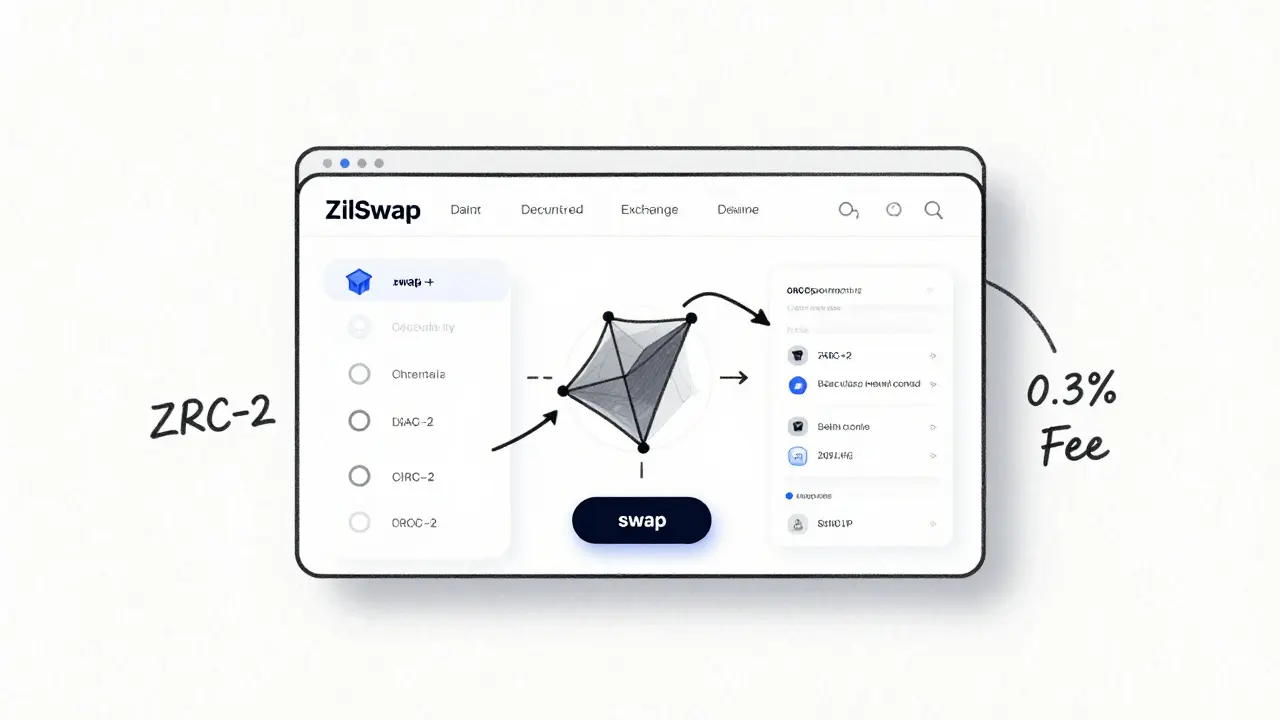
Trading on Ethereum can feel like paying a toll booth fee every time you blink. Gas costs spike, transactions stall, and your profit margins vanish before the trade even settles. If you are looking for a faster, cheaper alternative within a high-performance ecosystem, ZilSwap is a decentralized exchange built exclusively for the Zilliqa blockchain. It isn’t trying to be the next Uniswap or dominate the entire crypto market. Instead, it serves a specific job: being the primary liquidity hub for ZRC-2 tokens and ZIL.
In this review, we break down whether ZilSwap actually delivers on its promise of low-cost, high-speed trading. We look at the technology under the hood, the real-world costs, security measures, and how it compares to other options if you are deeply invested in the Zilliqa ecosystem. You will find out if this platform is worth your attention or if you should stick to centralized exchanges.
What Is ZilSwap?
ZilSwap is an Automated Market Maker (AMM) protocol. Unlike traditional exchanges that match buyers with sellers using an order book, ZilSwap uses smart contracts to facilitate trades against liquidity pools. This means you are always swapping tokens directly from the pool, ensuring instant execution without waiting for a counterparty.
The platform operates entirely on the Zilliqa blockchain, which is the first public blockchain to implement network sharding. Sharding divides the network into smaller groups called shards, allowing them to process transactions in parallel. For you, the trader, this translates to higher throughput and significantly lower fees compared to congested networks like Ethereum Mainnet.
ZilSwap supports two main token standards:
- ZRC-2: Fungible tokens (standard cryptocurrencies).
- ZRC-6: Non-fungible tokens (NFTs).
This dual support allows the platform to handle not just simple swaps but also complex interactions for gaming projects and digital asset marketplaces built on Zilliqa.
How ZilSwap Works: The Tech Behind the Trades
At its core, ZilSwap relies on the Constant Product Formula ($x * y = k$), a model popularized by Vitalik Buterin. Here is what that means for your wallet: when you swap Token A for Token B, the total value of the pool remains constant. As you take more of Token B, the price adjusts automatically based on supply and demand.
The technical backbone of ZilSwap is Scilla, which is Zilliqa’s custom smart contract language. Scilla was designed with formal verification in mind. In plain English, this makes the code easier to audit and less prone to the kinds of bugs that have drained millions from other DeFi protocols. Security isn't an afterthought here; it's baked into the language itself.
Because ZilSwap is native to Zilliqa, it benefits from the network's inherent speed. While Ethereum might struggle with 15-30 transactions per second during peak times, Zilliqa’s sharding architecture aims to handle thousands. This efficiency keeps gas fees consistently low, making micro-trades and frequent portfolio adjustments economically viable.
Fees, Liquidity, and Earning Opportunities
Let’s talk about money. ZilSwap charges a flat 0.3% transaction fee on every trade. This fee is split among liquidity providers (LPs) who deposit their assets into the pools. If you provide liquidity, you earn a share of these fees. Additionally, the platform often offers farming rewards, allowing you to earn extra tokens for locking up your capital.
Here is a quick breakdown of the cost structure:
| Feature | ZilSwap | Average CEX (Binance/Coinbase) | Ethereum DEX (Uniswap) |
|---|---|---|---|
| Trade Fee | 0.3% | 0.1% - 0.5% | 0.3% |
| Gas Fees | Very Low (<$0.01 typically) | N/A (Included in spread) | High ($1 - $50+) |
| KYC Required | No | Yes | No |
| Liquidity Depth | Moderate (Zilliqa-specific) | Very High | Very High |
The 0.3% fee is standard for AMMs, but the key differentiator is the near-zero gas cost. On Ethereum, a $10 trade might cost $5 in gas. On ZilSwap, that same trade costs fractions of a cent. This makes it ideal for traders who want to execute many small orders without eating into their profits.
Security and Trust: Is Your Money Safe?
In DeFi, trust is earned through code audits, not marketing claims. ZilSwap’s smart contracts have been audited by professional security firms. According to industry rankings, these audits confirm that the underlying code is technically sound and free from critical vulnerabilities known as of the last major update.
However, remember that "audited" does not mean "unhackable." New vulnerabilities can emerge, and user error remains the biggest risk. Always double-check contract addresses before interacting. ZilSwap integrates with trusted wallets like ZilPay Wallet and MetaMask, adding another layer of control over your private keys. You remain the custodian of your funds, which eliminates the risk of exchange insolvency but places the burden of security squarely on your shoulders.
User Experience and Accessibility
Getting started with ZilSwap is straightforward if you already hold ZIL or ZRC-2 tokens. There is no sign-up form, no email verification, and no KYC (Know Your Customer) process. You simply connect your wallet and start trading.
The interface is clean and functional. It prioritizes essential metrics: slippage tolerance, minimum received amount, and estimated gas fees. For beginners, the lack of hand-holding might feel intimidating, but resources are available. The platform provides documentation, webinars, and 24/7 live support to help users understand concepts like liquidity pools and impermanent loss.
Compatibility is broad. You can access ZilSwap via:
- Web browsers (Chrome, Firefox, Safari)
- Mobile apps (iOS and Android)
- Desktop applications (Windows, Mac, Linux)
This multi-platform approach ensures you can manage your positions anywhere, though the web version remains the most feature-rich for complex operations.
ZilSwap vs. Other Exchanges: Who Should Use It?
ZilSwap is not a one-size-fits-all solution. Its value proposition is tightly coupled with the Zilliqa ecosystem. Here is how it stacks up against alternatives:
For Zilliqa Holders: ZilSwap is the undisputed king. It has the deepest liquidity for ZRC-2 tokens. Trying to trade obscure Zilliqa-based tokens on Uniswap or PancakeSwap would require bridging assets across chains, incurring high fees and delays. ZilSwap keeps everything on-chain and efficient.
For General Crypto Traders: If you primarily trade BTC, ETH, or USDT, ZilSwap offers little advantage. Centralized exchanges offer better liquidity and ease of use for major pairs. Stick to Binance or Coinbase for mainstream assets.
For Developers: ZilSwap offers robust API access and SDKs. If you are building a dApp on Zilliqa, integrating ZilSwap for seamless token swaps is the standard practice. The Scilla compatibility ensures your contracts interact smoothly with the exchange’s liquidity pools.
Limitations and Risks
No platform is perfect. ZilSwap’s exclusive focus on Zilliqa is both its strength and its weakness. The total addressable market is smaller than Ethereum or Solana. This means:
- Limited Token Variety: You won’t find the latest meme coins from other chains here unless they are bridged to Zilliqa.
- Liquidity Concentration: While sufficient for most trades, extreme large-volume orders may experience higher slippage due to smaller pool sizes compared to global giants.
- Ecosystem Dependency: ZilSwap’s success is tied to Zilliqa’s adoption. If the Zilliqa network loses relevance, the exchange’s utility diminishes.
Additionally, while gas fees are low, they are not zero. During periods of extreme network congestion, fees may rise slightly, though rarely to painful levels.
Final Verdict: Is ZilSwap Worth It?
If you are part of the Zilliqa community, ZilSwap is not just an option; it is a necessity. It provides the fastest, cheapest, and most secure way to swap ZRC-2 tokens. The combination of Scilla-based security, sharding-driven speed, and low fees creates a compelling case for daily usage.
For those outside the ecosystem, ZilSwap serves as a great example of specialized DeFi infrastructure. It proves that niche blockchains can offer superior user experiences for their specific communities. However, don’t expect it to replace your primary exchange for trading Bitcoin or Ethereum.
Before diving in, ensure you have a funded ZilPay or MetaMask wallet, understand the basics of slippage, and start with small amounts to familiarize yourself with the interface. The platform is free to use, so there is no downside to testing the waters.
Is ZilSwap safe to use?
Yes, ZilSwap is considered safe. Its smart contracts have been professionally audited, and it runs on Scilla, a language designed for security. However, always verify contract addresses and never share your private keys.
Does ZilSwap require KYC?
No. As a decentralized exchange, ZilSwap does not require identity verification. You only need a compatible cryptocurrency wallet to connect and trade.
What tokens can I trade on ZilSwap?
You can trade any ZRC-2 token (fungible) and ZRC-6 NFTs listed on the Zilliqa blockchain. This includes ZIL and various project-specific tokens within the Zilliqa ecosystem.
How much do fees cost on ZilSwap?
The trading fee is 0.3% per transaction. Gas fees are minimal, often costing less than a penny, thanks to Zilliqa’s sharding technology.
Can I use MetaMask with ZilSwap?
Yes, ZilSwap supports MetaMask as well as the native ZilPay Wallet. Ensure your MetaMask is configured to recognize the Zilliqa network for optimal performance.